
Maintenance lead time is not just the interval between opening and closing a work order. It is the operational trail of downtime from the first signal on the equipment to the final record closure. When a request takes too long to become an official notification, triage gets stuck on phone calls, materials do not arrive on the right date, and execution is only confirmed at the end of the shift, the metric shows delay but does not show by itself where the operation lost control. The impact appears as unavailable machine hours, work order backlog, management decisions made one or two days late, and maintenance planning teams spending time reconstructing a history that should have been captured in the field. Without this map, the plant reduces a number in the report and pushes rework into planning, purchasing, and supervision. This article shows how to treat lead time as the operational flow of downtime, where to measure each stage, and which levers reduce delay without hiding the real cause.
Why maintenance lead time increases before it appears in the metric
Maintenance lead time increases when there is distance between the real event, the request record, the decision from the maintenance planning team, and the confirmed field execution.
It does not start when the technician picks up a tool. It starts when the asset gives the first sign of failure, when production reports the abnormal condition, and when someone decides whether it becomes a PM notification, an emergency priority, a planned work order, or an item for the next schedule.
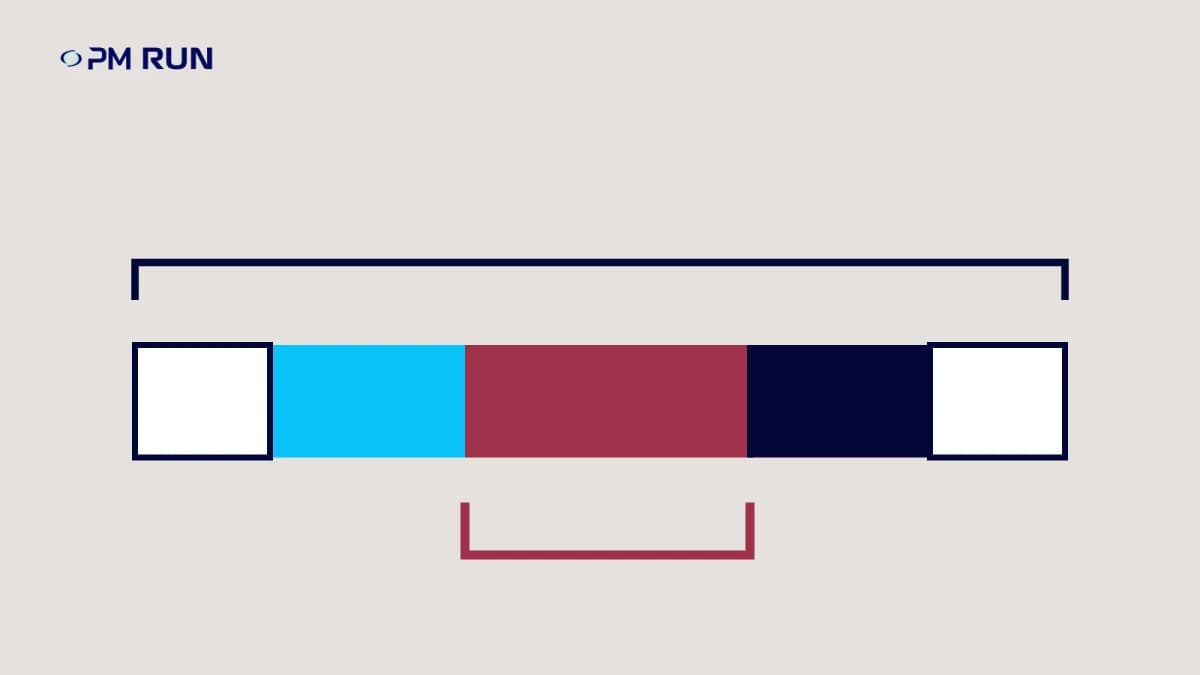
A useful operational definition is this: maintenance lead time is the interval across occurrence, recording, decision, execution, and confirmation. If any of these stages is invisible, the metric only shows the end of the story.
The delay starts before execution
The problem usually appears late because the initial flow is fragmented. Demand starts in the field, moves through radio, messages, spreadsheets, shift conversations, or a record rebuilt afterward. By the time it reaches maintenance planning, part of the time has already been consumed with no traceability.
- Occurrence without immediate recording: the failure exists, but there is still no formal request.
- Triage without clear criteria: priorities compete with each other and create an artificial queue.
- Planning without real capacity: work center, material, and operating window do not line up.
- Late field confirmation: the work was performed, but the data only enters the system at the end of the shift.
This interval distorts the reading of MTTR. Downtime may have started hours before the work order received the right status, reserved material, or assigned owner.
In many operations, indicators arrive one or two days late because they depend on manual closure, combining work orders, time confirmations, production spreadsheets, and later updates. The data exists, but it arrives after the decision it was supposed to support.
When lead time is hidden at the start of the flow, the plant pays twice: once for equipment unavailability and again for low confidence in maintenance indicators.
Where to measure maintenance lead time in the work order flow
Maintenance lead time should be measured by milestones in the work order flow, not by one single difference between open date and close date. That single view mixes queue time, triage, material waiting, execution, and administrative closure into the same number.
When maintenance planning depends on Excel, work order reports, and delayed confirmations, the chance of misclassifying the cause of delay increases. The issue is not only a delayed metric. It is a decision made with weak traceability.
Quotable measurement framework
- Request: when did the demand arise? Required data: occurrence time, asset, symptom, and requester. Risk of misreading: measuring only work order creation and ignoring the time lost before the record.
- Triage: was the demand classified with the correct priority? Required data: criticality, production impact, and safety condition. Risk: treating a critical failure as a common backlog item.
- Planning: did the work order stall because the scope was missing? Required data: PM plan, work center, skill matrix, and expected resources. Risk: blaming execution for a maintenance planning failure.
- Scheduling: did the activity enter the right operating window? Required data: shift, crew schedule, asset availability, and maintenance schedule sequence. Risk: confusing waiting for an operating window with low team productivity.
- Material: was reserved material available before execution? Required data: reserved item, purchasing status, withdrawal, and replacement. Risk: hiding a maintenance materials management bottleneck inside total work order time.
- Execution: was field time recorded at the right moment? Required data: start, pause, finish, field confirmation, cause, and evidence. Risk: rebuilding execution at the end of the shift and losing accuracy.
- Closure: was the work order technically closed with no pending items? Required data: confirmation, history, measuring point when applicable, and conclusion. Risk: keeping the work order open for administrative routine and inflating lead time.
With these milestones, the metric stops being a generic average and starts showing where the plant loses availability, increases avoidable cost, and exposes operational risk.
How to reduce maintenance lead time without pushing rework to planning
Reducing maintenance lead time requires shorter handoffs, eliminated waiting with no owner, and evidence captured at the moment of execution. Simply pressuring teams to close work orders faster only shifts the delay to maintenance planning.
When the technician confirms at the end of the shift, the planner rebuilds cause, time, material, and status through messages, paper, or spreadsheets. The indicator may close sooner, but it is born weak.
Operational checklist to reduce delay without hiding the flow
- Record the request at the real occurrence: the request should start with equipment, location, priority, symptom, field evidence, and stopped-machine condition when relevant. If the record arrives late, the entire lead time starts from a false baseline.
- Separate triage from scheduling: triage defines criticality and routing. Scheduling decides when to execute, based on crew capacity, shifts, absences, skills, and the operating window.
- Use a daily Kanban for the short queue: the daily Kanban helps expose work orders stopped by release, material, access, safety, or labor. Waiting stops being invisible.
- Schedule with real capacity: the daily maintenance schedule should not assume a full crew when there are vacations, leave, training, or certification restrictions.
- Confirm execution at the right moment: start, pause, finish, material applied, cause, and technical notes must be recorded during execution, not reconstructed later.
- Close with minimum traceability: a work order should only leave the flow when the data supports MTTR, recurrence, backlog, and availability analysis.
This changes when mobility for maintenance technicians reduces manual navigation and brings recording closer to the asset. In internal cases, a better data structure and less manual compilation by maintenance planning saved 6 to 7 hours per week in indicator closure.
The real gain appears when maintenance planning stops correcting the past and starts acting as strategic maintenance planning, addressing queue, capacity, and risk before downtime pressures cost, productivity, and availability.
The impact of lead time on downtime, MTTR, and availability
High lead time increases the total maintenance response time and can distort MTTR, availability, and OEE when field data arrives late or incomplete.
Lead time is not the same as MTTR
MTTR measures mean time to repair. Maintenance lead time shows something broader: how long the asset waited for diagnosis, decision, material, crew, execution, or reliable confirmation.
That difference changes the analysis. A work order can have short execution time and still carry days of delay before the intervention. For operations, the loss is not only the technician time. It is the interval in which downtime continues without real progress.
- MTTR loses accuracy when the real start or finish time of execution is reconstructed afterward.
- MTBF becomes less reliable when the failure is not recorded at the moment it occurs.
- Availability drops when the machine waits in queue, for release, for material, or for confirmation.
- OEE suffers when industrial downtime appears late or is classified incompletely.
Delayed data reduces management confidence
Lead time, MTTR, and availability only work well together when maintenance records the failure, execution, and closure with enough traceability to separate waiting from repair.
In practice, the manager looks at the dashboard and needs to know whether the issue was lack of technicians, missing material, scheduling delay, release queue, or slow execution. Without that separation, decisions turn into competing perceptions.
A concrete example is the Citrosuco case, where the evaluated plant reached 95% order confirmation. The relevant point is not to copy the number, but to understand the operational effect: the higher the confirmation rate in the correct flow, the lower the dependence on manual closure and the better the quality of the history.
When the plant measures lead time by stage and improves field confirmation, it reduces the risk of extended downtime, increases confidence in KPIs, and protects productivity without dressing up the metric.
Criteria for choosing a solution that reduces maintenance lead time
A solution to reduce maintenance lead time must connect the field, maintenance planning, and the system of record while preserving work order traceability and reliable decision data. If the tool only digitizes forms but does not close the cycle across occurrence, planning, execution, confirmation, and indicators, the delay only moves somewhere else.
Operational evaluation criteria
- Integration with the system of record: the solution should operate integrated with SAP, keeping SAP as the system of record, without creating a parallel database that maintenance planning has to reconcile later.
- Field recording of the occurrence: opening a PM notification or request with equipment, functional location, priority, evidence, and stopped-machine condition reduces the distance between the real failure and the official data.
- Planning based on real capacity: scheduling should consider work center, shift, absence, qualification, backlog, material, and operating window, not only a static work order queue.
- Execution and confirmation without reconstruction: the technician needs to confirm execution, time, material, photo, DMS, and notes at the moment of service, including through a mobile app when the routine requires mobility.
- Measuring points and traceability: measurement documents, out-of-limit readings, and equipment history should feed the flow without depending on late spreadsheet entry.
The decisive criterion is governance. The platform must show where lead time increased: triage, waiting for material, release, travel, execution, or closure. Without that separation, the indicator becomes a polished average and a poor decision tool.
In more mature operations, it is worth evaluating vendors with a track record in industrial environments. PM Run, for example, has served more than 12,000 users and positions maintenance integrated with SAP as an operational layer, not an ERP replacement.
When these criteria guide the decision, the plant reduces delay without losing traceability, improves maintenance planning productivity, and mitigates the risk of prolonged unavailability.
Maintenance lead time is not just a delay number; it is the operational trail of downtime. When the request enters the system late, waits for material, competes for capacity, or is confirmed after execution, the plant loses availability before it sees the cause. Without separating these milestones, risk grows: unplanned downtime, distorted MTTR, and maintenance planning fighting problems with incomplete data.
When the goal is to reduce waiting without hiding the metric, the solution needs to connect the field, maintenance planning, and the system of record with traceability. To evaluate this flow in your real operation and understand where PM Run can support it, book a PM Run demo.
Frequently asked questions about maintenance lead time
What is maintenance lead time in industrial maintenance?
Maintenance lead time is the total time between the real maintenance demand and the recorded completion of the work order. It includes stages such as request, triage, planning, scheduling, waiting for material, execution, confirmation, and closure. For that reason, it should not be treated only as technician execution time. When measured by stage, it shows where the plant is losing time before, during, and after the intervention.
What is the difference between maintenance lead time and MTTR?
MTTR measures mean time to repair, usually associated with restoring an asset after a failure. Maintenance lead time measures a broader journey, from the occurrence or request through work order closure. A maintenance job can have low MTTR and high lead time if the team takes too long to record, prioritize, release material, or schedule execution. This separation prevents execution from being blamed for delays that started in the queue, in planning, or in resource availability.
How do you measure maintenance lead time in a work order?
Measurement should use clear milestones in the work order flow, starting with the real occurrence or request opening and ending with final confirmation. The best practice is to separate triage time, planning time, scheduling time, material waiting time, travel time, execution time, confirmation time, and closure time. This view shows whether the issue is capacity, priority, release, material, shift, or field data. When confirmation is made only at the end of the shift, the metric loses precision and tends to hide the cause of delay.
When is it worth investing in a platform to reduce maintenance lead time?
The investment starts to make sense when delay is not isolated in one stage, but spread across the field, maintenance planning, storeroom, and management. Common signals include work orders waiting for decisions, schedules rebuilt every day, indicators arriving one or two days late, and heavy manual closure work in maintenance planning. In some scenarios, the planning team spends 6 to 7 hours per week only compiling indicators manually. A platform should reduce that friction without creating artificial closure or pushing rework to another team.
Does an SAP-integrated solution help reduce maintenance lead time?
It helps when it keeps SAP as the system of record and brings data closer to the source of the occurrence and execution. The gain does not come from replacing SAP PM, but from reducing field friction, standardizing confirmations, and giving traceability to work order stages. A layer like PM Run can support this flow with digital execution, field recording, and planning connected to the official process. The main criterion is verifying whether the solution preserves adherence to the process, technical objects, and operational history instead of creating a parallel database that is hard to reconcile.