
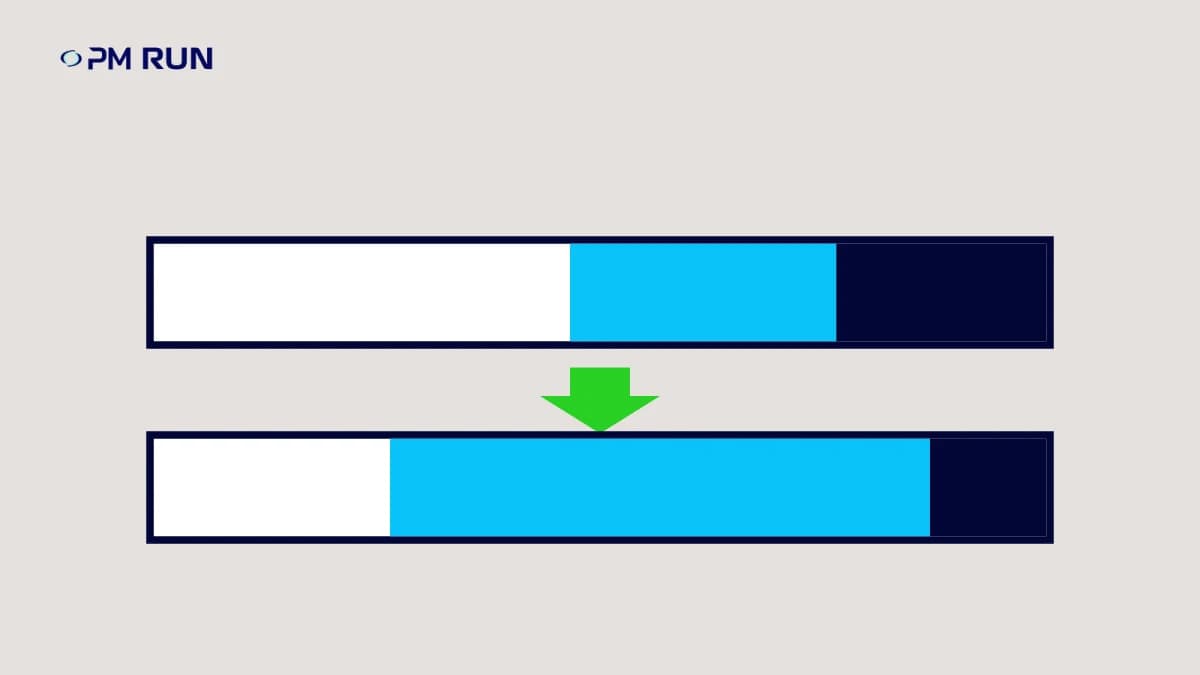
Maintenance productivity is the share of the team's time that becomes useful technical work on the assets, instead of waiting for parts, travel, permits, searching for information or reworking records. It grows when work orders reach the field already prepared, the schedule respects real capacity and labor is reported back to the system at the moment of execution, without manual consolidation by the planners.
Productivity is one result of maintenance management as a whole; the pillars, routines and KPIs of that management are covered in the complete guide to maintenance management.
Why maintenance management stalls when data arrives late
Maintenance management stalls when field information reaches the planning team after execution. Planners stop preparing the next window and start correcting labor reports, reconciling work orders and consolidating spreadsheets to turn routine work into reliable data.
Control usually already exists in the process, in the transactions and in SAP PM. The problem sits in the gap between the job done in the field and the reliable record of the order, the confirmation and the real status of the asset.
When that gap grows, the operation loses flow. The technician finishes the job, but the data is not entered at the moment of execution. The supervisor chases feedback by message. The planner cross-checks the order list (IW38), the confirmations (IW47), production spreadsheets and hand-built dashboards to close a picture that is already out of date.
- Incomplete field reporting creates rework before any analysis starts.
- Data one or two days late reduces the accuracy of scheduling and prioritization.
- Weak traceability makes it hard to know who did the work, when, and what is still open.
- Hidden real capacity sits between work centers, backlog and orders not yet confirmed.
The later the data arrives, the more time planners spend cleaning information, the less time is left for maintenance planning and control, and the higher the risk of deciding with an incomplete view of execution. Reducing that delay protects the quality of industrial maintenance KPIs and cuts the cost of rework, waiting and late decisions.
How to measure maintenance productivity
The most direct measure is wrench time: the share of the shift in which the technician is actually working on the asset. Divide hours of hands-on execution by the hours available in the period and multiply by 100. Preparation, travel, waiting for parts, waiting for permits and searching for information stay out of the numerator.
The absolute value matters less than the breakdown of lost time. A work sampling study over a few shifts, recording what the crew is doing at regular intervals, shows how much time goes to each type of wait and where to act first. The method and the most common causes are covered in wrench time in maintenance.
Other indicators complete the picture:
- Schedule compliance: how much of the week's committed schedule was executed.
- Planned versus actual hours: shows whether work order estimates reflect field reality.
- Orders returned for missing information or material: measures the quality of job preparation.
- Work order confirmation rate: shows how much of the execution comes back recorded in the system.
To compare workload with the crew actually available, see how to calculate real maintenance capacity.
What maintenance management needs to control beyond the work order
Consistent maintenance management controls the cycle between notification, order, operations, confirmation, measurement, attachments, work center and execution status.
The work order is the visible interface of the flow. What sustains process reliability is the quality of the links between execution, SAP PM objects, available capacity and field evidence.
Components that define real control
- Maintenance notification: records the initial demand, the perceived failure, the priority and the context that guides planning.
- Maintenance order: turns demand into plannable work, with operations, materials, responsible crafts, dates, work center and technical history.
- Equipment and functional location: connect the job to the right asset and avoid loose analysis of MTBF, MTTR, repeat failures and cost by area.
- Operations and work center: show who executes, which capacity will be consumed and where the schedule may overflow before reaching the field.
- Confirmation: closes the operational cycle with actual time, labor, status and order progress.
- Measuring point and measurement document: keep the technical reading linked to the asset instead of a note lost on paper or in a side spreadsheet.
- Attachments via DMS: keep photos, reports and documents associated with the right object, with traceability for audits and later analysis.
When these links fail, planners end up reconciling order lists, confirmations, production spreadsheets and hand-built dashboards. The indicator arrives late, and the team debates the data before debating the decision.
How to structure maintenance management across the field, planning and SAP
A practical structure starts by mapping the data flow: what originates in the field, what planners schedule and what must go back to SAP as the system of record, with traceability. The gain comes from reducing typing, rework and waiting between execution, planning and order confirmation, and not from building yet another parallel database.
A practical roadmap for organizing the flow
- Define where each piece of data originates: notification, order, labor report, measurement, technical attachment and field evidence need a clear source. When technicians report later, planners work with a delay.
- Separate execution from planning: the field executes and reports with low friction. Planners schedule, prioritize the backlog, adjust capacity and analyze variances. Mixing these roles creates an invisible queue.
- Tie the data to SAP PM objects: equipment, functional location, work center, maintenance plan and measuring point travel with the order. Without that link, MTBF, MTTR and availability lose accuracy.
- Standardize the return to SAP: notification (IW21), order (IW31), confirmation (IW41), measurement document (IK11) and plan (IP10) flows come back with status, confirmation, measurement and history, keeping process adherence without duplicating control outside the ERP.
- Remove repeated manual steps: find every point where the same information is typed twice and eliminate it, either through a process change or a digital flow integrated with SAP.
At Citrosuco, an operation with fragmented manual execution, paper routines and difficulty centralizing data in SAP reached 95% work order confirmation in the evaluated plant after moving execution to an integrated digital flow.
How to improve maintenance productivity
The actions that raise productivity the most target the time the crew loses before and after the job, not the technician's speed during the repair.
- Prepare the order before scheduling: scope, reserved parts, tools, procedure and permits defined before the order enters the week.
- Schedule against real capacity: subtract vacations, training, typical emergencies and travel before committing crew hours.
- Group jobs by area and window: reduce travel and use the same equipment stop for several orders.
- Shift the mix toward planned work: emergency corrective work breaks the schedule and consumes overtime; increasing the planned share is the most sustainable way to gain productivity. The differences are explained in types of maintenance.
- Give access to history in the field: a technician who can check previous orders, measurements and documents on site diagnoses faster.
- Report at the moment of execution: reporting on the spot removes the rework of rebuilding the order from memory at the end of the shift.
Once the team knows where time is lost, maintenance lead time helps expose the wait between the notification and the asset's return to operation.
Metrics that show the business impact of maintenance management
The impact of maintenance management shows up in planning productivity, less rework, higher work order confirmation and a better reading of MTTR, MTBF, OEE and availability. When data arrives closer to execution, leadership stops looking at outdated dashboards and starts seeing operational consequences and real response capacity.
Practical impact matrix
- Work order confirmations: show adherence between planned and recorded execution. When they rise, gaps between field, planning and SAP shrink and order traceability improves.
- MTTR: shows how long the operation takes to get back to flow. If labor reports arrive late, the indicator loses accuracy and leadership decides late about resources, shifts and priorities.
- MTBF: helps separate recurring failures from isolated events. Without reliable history by equipment and functional location, preventive planning works with noise.
- OEE, overall equipment effectiveness: connects maintenance to industrial productivity. Misclassified stops distort the reading of availability, performance and quality.
- Availability: translates the effect of maintenance on the productive asset and brings engineering, operations and executives into the same capacity conversation.
- Planning time: measures the effort spent consolidating order lists, confirmations, spreadsheets and reports. At Rivelli Alimentos, time spent on manual tasks fell by 50%.
Each maintenance metric is only valuable when it links a reliable record to an operational consequence, such as less rework, shorter downtime, better prioritization and stronger operational control.
Criteria for choosing SAP-integrated maintenance management software
The choice should prioritize SAP integration, process adherence, mobile execution, operational planning, traceability and low friction for technicians. The right platform improves execution and planning while keeping SAP PM objects, orders and notifications connected to SAP as the system of record.
The cut-off test: if the solution requires duplicate master data, redesigning SAP PM rules outside the ERP or consolidating data later in spreadsheets, it increases the rework it should remove.
Technical buying criteria
- SAP integration: check whether the solution respects SAP PM objects and uses consistent integration patterns, such as PI or CPI, according to the customer's architecture.
- Process adherence: the platform follows the real flow of notification, order, confirmation, reservation, measurement document, attachment and status, without forcing the team to abandon a validated process.
- Mobile execution: technicians record field evidence, times, materials, measurements and closeout with little friction, including in areas without stable connectivity.
- Operational planning: planners see backlog, capacity, work center, schedule and priority without spending hours cross-checking manual reports.
- Traceability and governance: every labor report has a source, owner, time stamp and technical link, consistent enough for audits, KPIs and management decisions.
PM Run works in this layer, with mobility and planning on top of SAP PM, and serves more than 12,000 users. In published cases, Citrosuco reached 95% work order confirmation in the evaluated plant and Rivelli Alimentos cut time spent on manual tasks by 50%.
Frequently asked questions about maintenance productivity
What is maintenance productivity?
It is the share of the crew's available time that turns into hands-on technical work on the assets. Waiting for parts, travel, permits, searching for information and reworking records reduce that share, so productivity depends more on planning and preparation than on an individual technician's pace.
How do you calculate maintenance productivity?
Divide hours of effective execution by the hours available in the period and multiply by 100. To know where to act, run a work sampling study that splits lost time by type: waiting for material, travel, permits, information and reporting.
How can I tell if maintenance management is creating rework for planners?
The clearest sign is when planners must reconcile spreadsheets, order lists, confirmations and manual dashboards to close indicators. It also shows when data arrives one or two days late, or when work order confirmation depends on follow-up after execution.
Which KPIs should guide industrial maintenance management?
The base includes MTBF, MTTR, OEE, availability, schedule compliance, plan adherence, backlog and work order confirmation rate. These indicators only guide decisions when they are linked to equipment, functional location, work center and reliable history.
When does SAP-integrated maintenance management software make sense?
When SAP PM remains the system of record, but field and planning routines are spread across paper, spreadsheets and transactions. An integrated platform reduces friction when it helps technicians record execution, confirmations, attachments and measurements in the correct flow, without creating a parallel system.
Next step
To bring execution to the field and capacity-based scheduling into a flow integrated with SAP PM, see PM Run's maintenance management system.