Back
Manutenção Industrial

GUT Matrix in Maintenance: A Filled Priority Case

P
PM Run Team
August 23, 2026

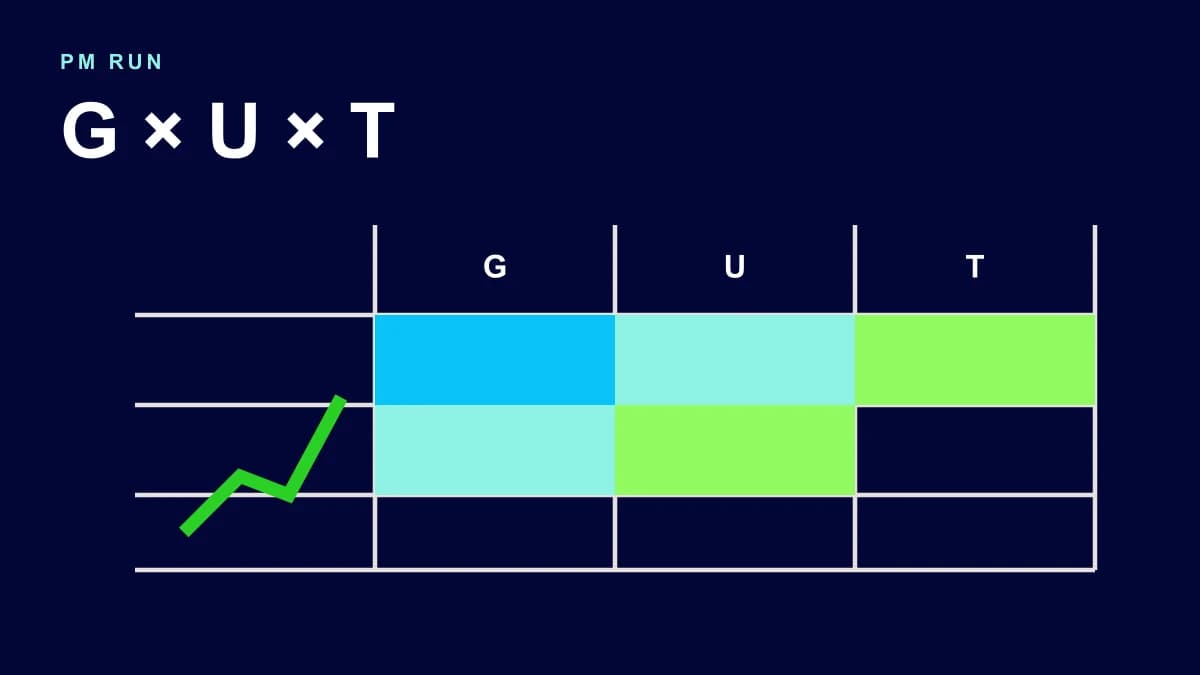
The GUT matrix compares problems through gravity, urgency, and trend. In maintenance it can discipline the order of attention when several eligible items compete for limited capacity, provided every score has an observable anchor.

The utilities GUT matrix resolves a sequencing dispute rather than a causal investigation. Gravity, urgency, and trend are anchored in observable consequences so the weekly meeting can freeze an executable queue, record exceptions, and explain why one item moved ahead of another.

When GUT Matrix in Maintenance is the right tool

Use it when the backlog contains different problems, the maintenance window is constrained, and the team must explain why one item enters the schedule before another. Before the first workshop, define the decision object, observed period, technical approver, comparison condition, and official source of record.

A common misuse is scoring from intuition, hiding criteria, mixing emergency work with optional improvement, and using GUT as a substitute for the master criticality of the technical object. That behavior generates activity but does not establish changed condition. A method closes only when the decision enters the correct workflow and returns with reviewable evidence.

Minimum inputs before application

  • Technical object: equipment, functional location, system, family, or workflow with an unambiguous boundary.
  • Condition: expected function, observed deviation, consequence, time, and operating context.
  • History: notifications, orders, confirmations, materials, measurements, and technical documents for the period.
  • Decision rule: target, scale, hypothesis, internal criterion, or acceptance condition approved before results are known.
  • Governance: technical owner, executors, approvers, dependencies, deadline, and authority to reopen the conclusion.

The utilities backlog analysis starts by accepting what history does not yet prove. If any of consequence, deterioration horizon, trend, readiness, material, or access is missing, the team opens a bounded collection task with a source, owner, and due condition. The gap receives no estimated score or reconstructed narrative; it explicitly limits what GUT matrix can support.

Maintenance application steps

StageTechnical workRequired outputSAP PM handoff
Define the universeCompare only items eligible for the same decision and separate emergencies already controlled by a higher rule.Five comparable items with owner and current condition.Each item keeps its notification or order in SAP PM.
Anchor the scaleDescribe what scores 1 to 5 mean for gravity, urgency, and trend in the plant context.Criteria approved before scoring.The rule supports the planning process without changing equipment criticality.
Score with evidenceAssign every score using consequence, technical deadline, and observed behavior.Matrix with a reason for each score.Link the item to inspection, history, and condition evidence.
Calculate and challengeMultiply G × U × T, review ties, and test sensitivity where a score is uncertain.Ranking plus documented uncertainty.The ranking informs the meeting, while scheduling still checks material and capacity.
Schedule and reviewConvert selected items into planned scope and record why other items remain in backlog.Weekly schedule and reassessment date.PM Run Planning supports capacity and scheduling on top of SAP PM orders.

GUT matrix separates reasoning from execution for the utilities backlog. Hypotheses and criteria remain in the analysis record. Physical work, inspection, and tests use an order; a new symptom uses a notification; a recurring change reaches a task list or plan only after the proper technical approval.

Complete industrial case: prioritizing the utilities backlog for the weekly schedule

Every person, asset, duration, quantity, and outcome in the utilities backlog is didactic. The values demonstrate a completed GUT matrix application without representing a PM Run customer, industry reference, regulatory threshold, or performance promise. A plant reusing the structure must replace its scales and criteria.

Maintenance Planning must select two interventions from five utilities issues. Every item has passed safety and operations triage. The week has 32 mechanical hours, 16 electrical hours, and one process-release window.

Case baseline

DataDidactic valueInterpretation
Eligible items5Each has an initial scope and technical owner
Mechanical capacity32 hDidactic weekly limit
Electrical capacity16 hDidactic weekly limit
Process windows1Two interventions in the same area cannot overlap

Case target: create a transparent and executable queue that respects risk, capacity, material, dependencies, and the operating window without redefining technical-object criticality.

The target combines capacity reserved for top-ranked items, weighted age, and justified overrides under the same scale, cutoff date, and available capacity. Method quality appears when different reviewers reproduce the order from the same evidence, leading ready items enter the schedule, and every inversion records authority, reason, and duration. A change in anchors or comparison universe starts a newly identified scoring round instead of rewriting the prior ranking.

Completed matrix for the five eligible items

Rank and pending conditionGUTProductAnchored rationaleReadiness
1. Leak at steam header valve UV-12554100Hot-surface exposure, reduced useful pressure, and a rise from 18 to 31 kg/h; the weekly outage is the last window before a 21-day campaign.Ready: seal kit, isolation, 12 mechanical hours, and release confirmed.
2. Vibration on seal-water pump BA-0754480Loss removes redundancy; overall velocity rose from 4.8 to 6.2 mm/s in four weeks while the standby pump is unavailable for civil work.Ready: bearing, alignment tool, 20 mechanical hours, and operational test available.
3. Degraded ventilation at MCC-0344348Internal temperature reached 44 °C at high load, 6 °C above reference; partial redundancy and a daily round remain.Blocked: filters arrive in five days; procurement owner recorded.
4. Failed-open drain on compressor CA-0233436Increasing energy loss without an immediate capacity restriction; estimated flow rose on two surveys.Ready: valve in stock, 4 mechanical hours, no process release.
5. Pump-house lighting retrofit2228Energy improvement while lighting remains within the internal criterion and failures were stable during the quarter.Ready: luminaires and 8 electrical hours, without a consequence that outranks the deviations.

Scores were frozen at the cutoff. The G × U × T product ranks all five problems under the same anchors. Readiness does not change a score; it shows whether a leading item can consume real capacity or needs an unblock action first.

Decision produced by the method

The approved queue starts with leak UV-12 at 100 points and continues with pump BA-07 at 80. Together they consume all 32 available mechanical hours, while the single process release is reserved for the header. MCC-03 remains third with a daily round and procurement linked to its notification until filters arrive. CA-02 and the retrofit remain in backlog for the next review.

The decision retains all five items, their scores, and the reason each remains. Plant safety rules continue to override the queue. If MCC temperature or pump condition crosses its response limit, the team invokes the applicable flow and records the exception without rewriting the historical matrix.

Indicator and verification window

Primary indicator: percentage of selected GUT items that enter the schedule with all dependencies met, supported by backlog age and score movement.

Case calculation: GUT score = Gravity × Urgency × Trend. Multiplication orders items but does not turn an ordinal scale into physical precision.

Window: weekly review for urgency and capacity, monthly review for trend, and quarterly audit of score anchors.

Order completion confirms execution and acceptance for that work. GUT review examines a different result: whether the scale stayed consistent, whether the 100-point and 80-point items received planned capacity, whether blockers were managed, which overrides displaced work, and how the rest of the queue aged. Weekly governance closes only when each position change is explained by evidence, readiness, or a formal override.

Limits and neighboring methods

Limits: GUT does not calculate failure probability, classify assets, or override safety rules. Its output is only as good as the anchors and comparability of the item set.

Neighboring methods: Asset criticality classifies technical objects, Pareto shows historical concentration, and FMEA prioritizes failure modes. GUT orders current problems and actions.

Method selection follows the question raised by the utilities backlog. a risk matrix combines consequence and likelihood, criticality guides strategy, and WSJF includes job size. The GUT matrix freezes the weekly sequence with anchored scores and justified overrides; risk, criticality, or WSJF enters when the decision depends on likelihood, asset strategy, or job size.

Anchored scales, sensitivity, and an executable queue

The utilities backlog is scored only after Gravity, Urgency, and Trend anchors are approved. A score of five is not a synonym for important. It represents a defined consequence, a short deterioration horizon, or an observed acceleration for that axis.

Multiplication orders candidates but does not create physical precision. The planner recalculates leading items with one-point changes on uncertain axes. A rank that flips easily receives evidence review; a robust rank can enter the weekly decision without pretending that ordinal numbers are measurements.

Readiness remains separate from priority. Material, access, skill, release, and scope divide work into high-priority ready, high-priority blocked, and lower-priority ready. A blocked item keeps an owner and visibility but cannot occupy schedule capacity as if executable.

Reducing the UV-12 Trend score from 4 to 3 changes its product from 5 × 5 × 4 = 100 to 5 × 5 × 3 = 75. BA-07 remains at 5 × 4 × 4 = 80 and becomes the queue leader. Because a defensible one-point variation changes first place, the ranking is unstable on this axis. Before freezing the queue, the team reviews the evidence supporting the UV-12 Trend score. If the score remains 3, BA-07 leads unless an approved sequencing or override rule applies and is recorded.

Notifications retain observed conditions; released orders hold operations, materials, and dates. PM Run Planning compares rank with capacity and skill, while field return updates the state for the next cutoff. SAP PM remains the history of notifications and orders.

Audit repeats a sample with current anchors, reviews safety overrides, and looks for systematic score inflation. PM Run does not assign GUT values or replace asset criticality. Customer-defined analytics may follow weighted age, readiness, and completion.

  • Were the same anchors used across areas?
  • Was every override authorized and explained?
  • Could top-ranked work actually be executed?
  • Can the team explain a rank change between weeks?

Moving from rank to executable work

After the queue is frozen, maintenance planning checks capacity and dependencies. A score cannot bypass a technical block. Ready work receives a planned order with scope and acceptance proportional to the evaluated consequence.

Field return changes readiness rather than rewriting historical scores. New deterioration may justify a Trend review. PM Run Planning supports comparison between ranked demand and available capacity while SAP PM remains central.

Quarterly governance looks for work that remains indefinitely in the middle. If the scale hides aging, a separate aging control is created instead of inflating GUT values.

The meeting records cutoff time, work center, committed hours, blocked materials, and override authority. These details explain why two items with similar products can receive different weekly treatment.

Trend is reassessed from observed movement, not anxiety about future failure. Gravity remains tied to consequence, and Urgency remains tied to the treatment horizon.

Additional control questions

The weekly record preserves the exact scores and anchors used at cutoff. Rewriting old scores with new information would erase decision quality. New evidence enters the next cycle with a reason and later shows whether the expected Trend actually occurred.

Capacity consumed by overrides is measured separately. If urgent exceptions occupy most of every week, the problem is no longer ranking alone. It may indicate system instability, chronic readiness failure, or insufficient capacity.

Score ownership is distributed by evidence source. Operations validates consequence and treatment horizon, engineering validates deterioration, and planning validates readiness. No participant can inflate all axes without challenge.

Quarterly review compares predicted trend with actual change. Repeated overestimation triggers anchor calibration; repeated underestimation triggers a review of observation frequency and escalation rules.

Readiness review takes place after scoring so planners do not lower priority merely because a job is difficult. A blocked high-ranked item receives an owner and target unblock date. The executable queue then uses available capacity transparently while preserving the item's score, age, blocker, and expected return to scheduling.

Score calibration uses real decisions from the previous quarter. Reviewers compare expected deterioration with the observed condition and inspect whether high Gravity items received proportional controls while waiting. This evidence improves anchors without retroactively rewriting accountability.

The queue owner performs a readiness cut before the scheduling meeting and records which blocker can be removed within the week. This avoids spending scarce meeting time rediscovering missing materials. Each override has authority, reason, duration, and the item displaced from capacity. Expired overrides return to normal ranking automatically. The group reviews top-ranked work completed, high-ranked items still blocked, changes in score, and items that crossed an aging threshold. Safety controls or operating restrictions follow their own governance and never depend on the GUT product. At month end, the planner compares planned hours, completed hours, emergency insertions, overrides, and aged items. The matrix is useful when rank changes execution and every departure from the queue remains auditable.

The scoring meeting receives a prepared evidence card for each candidate: condition, consequence, observation date, deterioration signal, current barrier, and order status. Discussion changes a score only when the card changes. Readiness is updated closer to scheduling, so a late material arrival can move work into the executable queue without rewriting technical priority. The owner also records the work displaced by every override, making the cost of exceptions visible. Monthly analysis follows items repeatedly blocked despite high rank and assigns an unblock plan. When aging rather than urgency drives concern, the operation uses a separate aging rule. GUT remains a temporal sequencing device and does not absorb every dimension of maintenance governance.

Technical sources

Bring a real weekly backlog to a PM Run demonstration and see how approved priority, capacity, schedule, execution, and SAP PM history remain connected.

GUT Matrix
Maintenance Backlog
Prioritization
Maintenance Planning
Asset Criticality
SAP PM
PM Run

Built for SAP.Not just adapted. Native.

PM Run connects planning, field execution, and supervision through native SAP integration, with no parallel spreadsheets, no re-entry at end of shift, and no data loss.

Used by leading operations in their sectors

Logo Volkswagen
Logo Eurofarma
Logo Saint-Gobain
Logo Marcopolo
Logo Moura
Logo Alpargatas

Back to blog